
9 Ways To Keep Mice (and Rats) AWAY from Bird Feeders!

If you feed birds, it’s almost inevitable that mice (and maybe rats) will show up.

I mean, can you blame these hungry rodents? From their standpoint, I’m sure they think they won the lottery with all the food lying around!
I think that most people are OK with an occasional mouse showing up at their bird feeder. But unfortunately, mice and rats can reproduce extremely fast. So before you know it, there could be dozens hanging around, getting into your house or garage, and eating a significant amount of bird food.
- Check out the LIVE animal cameras in my backyard! (You may even see a mouse at night)
Today, you will learn 9 strategies that will help keep mice and rats away from your bird feeders!
Make sure you keep reading to the end, where I share the things you should NOT do to get rid of rodents.
#1. You MUST keep the area under your feeders clean.
The most likely place where you will see mice and rats is eating the bird food on the ground. So it shouldn’t come as a surprise that to keep them away, you need to keep the ground exceptionally clean and free of seed!
Here are a few things you can do to make sure there’s not much seed on the ground:
-
Don’t intentionally put bird food on the ground.

I know this sounds obvious, but make sure you are not using ground feeders or throwing handfuls of seed onto the ground.
-
Clean up food that ends up on the ground.
Every day before the sun sets, head out to your feeders and rake up any food that ends up on the ground and throw it away. To make the chore easier, try buying a leaf vacuum to suck the extra food up!
-
Try only feeding birds shelled sunflower seed.

As far as bird food goes, sunflower kernels (with the shell already removed) are the most popular. Almost every bird that comes to feeders loves the stuff. In fact, when birds are looking through a birdseed mix, it’s typically the sunflower they are searching for.
I know that at my feeding station, whenever any sunflower kernels end up on the ground, they are quickly gobbled up by ground-feeding birds, chipmunks, and squirrels. Since the sunflower seeds are eaten so quickly, there shouldn’t be much (if any) food for mice and rats to eat once the night comes.
As another benefit, you will avoid a mess of shells that you need to clean up later, since you are buying the sunflower seeds already shelled. 🙂
-
Use feeders that DON’T spill bird seed.
Most birds are messy eaters and will poke through and throw birdseed around, looking for the food they want to eat. But, unfortunately, mice and rats will GLADLY eat all the seeds that end up on the ground.
It would be best if you had bird feeders that either don’t let birds toss seed out of the feeder or catch the food before it gets to the ground.
One feeder I own that would be a good choice is the Absolute II. Since birds have to reach inside to grab the bird food, they can’t really throw any of it out.

COMPARE PRICES – Amazon or JCS Wildlife – Save 10% automatically by clicking this link!
-
Install a tray underneath your feeders to catch the seed.
Luckily, many tube feeders have trays that you can attach to the bottom. The trays catch any food that the birds knock out of the feeder, so it never ends up on the ground for the mice.

The combination that I use is an Aspects tube feeder with a 8.5-inch Seed Tray attached to the bottom.
#2. Don’t use this type of bird feeder!
Both mice and rats can climb. Unfortunately, this means that even if you keep the ground exceptionally clean, it’s possible for them to climb onto your bird feeders.
The WORST type of bird feeder you can use is an open platform.

These feeders provide a large area that rodents can sit inside while they comfortably gorge themselves on seeds.
Instead, here are a few feeder recommendations that should help dissuade mice and rats.
- Tube feeders make it hard for rodents to eat.
It’s challenging for them to scale down to the slender metal perches. Even if they make it there, it’s not easy to stay balanced.
- Weight-sensitive feeders work great for rats!
This type of feeder works by closing access to the food once enough weight is put on the feeding perch. Rats are almost the same size as squirrels, so nearly every feeder that prevents squirrels should also stop rats.
#3. Make sure you have proper seed storage!
The thing I dislike most about mice is when they start living in my shed, which is where I store bird food. On numerous occasions, I have found nests in the oddest places (in buckets, boxes, etc.), and generally, they make a mess.
But, I can’t blame the mice for causing this damage and mess, as they just want a chance to get some easy food. It’s my responsibility to ensure that I am storing all of my bird seed properly and keeping the inside of my shed CLEAN.

This is a picture inside my shed. As you can see, I mostly use metal trash cans for seed storage. Also, I swept up the excess seeds from the ground as soon as I snapped this photo. 🙂
My recommendation is to purchase metal bins with a lid or find storage containers made of hard plastic.
Also, try to clean up whenever you spill any food on the floor. Even if you only spill a few seeds per day, this will attract mice and rats to visit daily and probably decide to live there.
#4. Use spicy food to stop mice and rats.
Do you enjoy having habanero peppers all over your food? Or does your face grimace just thinking about the heat you would experience?

We (people) feel the heat of spicy foods because of something called capsaicin, which is the active ingredient found in chili peppers that makes them hot and irritating to eat.
But here is the crazy thing:
Only mammals feel the effects of capsaicin! Birds are not affected.
Coles Hot Pepper Sunflower Seeds:

COMPARE PRICES!
- JCS Wildlife – Use code “BWHQ” to save 10% at checkout!
- Amazon
Using bird food that has been coated in hot pepper is worth trying. Both mice and rats should take one whiff and not like what they smell. Birds, who don’t have much of a sense of smell or taste, won’t be bothered one bit by the spicy food.
Using spicy seeds should work at preventing all sorts of mammals at your feeding station, including squirrels, raccoons, and bears! Check out the experiment I did below, where I tested to see if hot pepper seed actually works.

#5. Stop mice from climbing to your bird feeders!

Believe it or not, if you don’t take any precautions, both mice and rats may climb up your feeder pole and into your bird feeders.
But luckily, mice and rats don’t have the same athletic ability that squirrels possess. They can’t jump vertically or horizontally very far or maneuver around baffles well, so it’s relatively easy to make sure these rodents can’t climb into your feeders. It’s WAY more challenging to keep squirrels off your bird feeders than mice!
Here are some easy things you can do to keep rats and mice on the ground!
-
Baffle your bird feeder pole!

A baffle is merely a contraption that is designed to prevent mammals from climbing up your bird feeder pole. While they are mostly intended to stop squirrels, they are exceptional for stopping mice and rats too.
Baffles can be purchased separately (or made) and attached to your existing pole. In general, there are two different styles/shapes of baffle you will encounter:

Audubon Steel Baffle / Woodlink Baffle
Both of these baffles are designed to attach below the bird feeder. As mice climb, they cannot get around the baffle and, therefore, can’t eat your bird food!
-
Buy a pole that specializes in stopping rodents from climbing up!
If you don’t own a bird feeder pole yet or are looking for a new one, I recommend buying one with a baffle already built into the design.
For example, I used to own the Squirrel Stopper Pole, and not one critter EVER got past the attached spring-loaded baffle. (Last year, I built a more heavy-duty bird feeder pole due to the high number of bird feeders I was using. 🙂 )
Check out the spring-loaded baffle on the Squirrel Stopper pole below:
Compare Prices of the Squirrel Stopper Pole!
- JCS Wildlife *Use code BWHQ to receive 10% off!*
- Amazon
It’s made of metal, which rodents have a hard time climbing in general. Wood is much easier for them to scale.
-
Hang your feeders from a strong fishing line!
An easy way to stop mice is to hang your bird feeders from a strong fishing line!
The fishing line is too small and thin for rodents to navigate down, and they will either need to make a leap of faith from the tree or head back to the ground.
#6. Bring your bird feeders inside at night.
Mice and rats typically only come to bird feeders under cover of darkness. They may show up during the day, but these mostly nocturnal rodents prefer to come at night.
An easy way to solve a rodent problem is to bring your bird feeders inside each evening. In addition, make sure that the ground is clean too, and they won’t have anything to eat!
The only drawback to this strategy is that it’s labor-intensive. Every evening before dark, you need to bring your feeders inside and then take them back out every morning.
#7. Attract owls to your yard!
Do you know what loves to eat mice and rats?
OWLS!
If you are looking at a natural way to get rid of some of the rodents in your yard, you should try attracting owls. Check out the video below that shows an owl catching a mouse while at a bird feeder!

It’s going to require some patience, but with some effort, it’s possible to get these interesting raptors to visit. You can learn some ways to get owls to your yard with this other article that I wrote!
#8. Trap them (and relocate).
If all else fails, you can set out traps to catch both mice and rats.
Honestly, this is my least favorite strategy. You are just treating the symptom and not the actual problem. There are ALWAYS going to be more rodents.
But if you must use traps, have you ever tried a LIVE mousetrap?

I have used mouse traps in my house before and always DREADED checking them. I hated finding a dead mouse. Even worse, there were a few times where the mouse wasn’t quite dead yet.
Instead, I have been using traps for the past few years that don’t kill the mouse. It just captures them, and then I can release the mouse an incredibly far distance away in my woods.
Instead of dreading checking the traps, it has turned into a fun activity that I do with my kids. They love when we catch a mouse, and we can take a walk together to release it. It gives us a chance to talk about nature and the circle of life too.
In case you’re interested, here are the live traps that I use:

Just make sure that once you set one of these traps, you put a reminder on your phone to check it within 24 hours. You don’t want to accidentally leave a mouse trapped inside, as that defeats the whole purpose of a “live” trap. And never set the trap in the sun!
#9. Here are three things you should not do!
Don’t Use THESE Strategies To Keep Mice Away From Bird Feeders!
-
Poison:
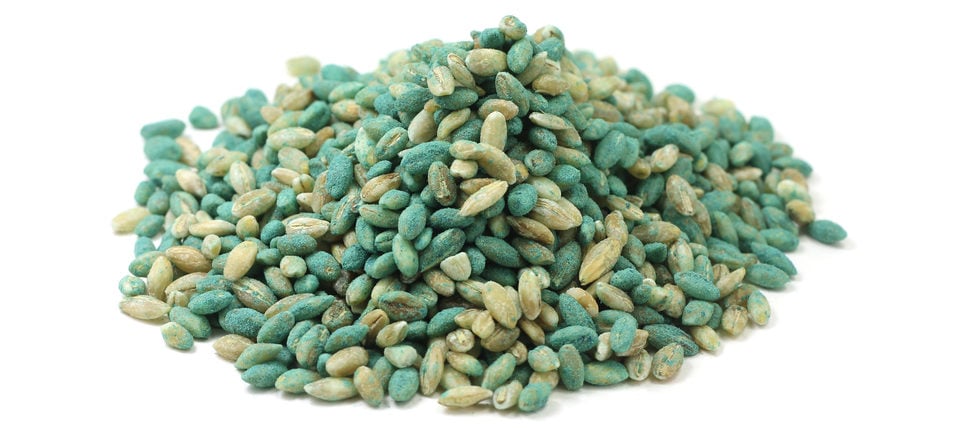
DON’T USE THIS STUFF!!!
Not only will you be sentencing mice or rats to a painful death, but what if your dog accidentally ingests some?
Also, it’s common for predatory animals, like foxes, owls, and hawks, to eat a rodent that has just been poisoned since it makes an easy meal to them. As soon as this poisoned mouse has been consumed, there is no hope for that predator either, and it soon will die. And then any scavengers that eat the poisoned predator will also die.
- RELATED: 5 Reasons Why You Should NEVER Use Rat Poison!
-
Glue traps:
These traps are incredibly painful for animals too. It’s common for them to chew off their arm to try and escape.

Don’t use glue traps!
-
Letting your cat outside to kill them:
In addition to mice, cats LOVE to prey on and kill birds. So if you still want to see lots of birds at your feeder, do you think letting your cat outside is a great idea?
Especially since most people let their cats out during the day when birds are most active, and mice and rats typically don’t come out until night.
How do you keep mice and rats off your bird feeders?
Let everyone know what has worked best for you in the “Comments” section below!

The problem is not the feeder it is the seeds on the GROUND! Ok I need to clean the ground, come on this is a joke! How? with a vacuum cleaner. It is impossible to clean neat garden ground. This is the BIG problem!
We started seeing rats at our birdfeeder IN THE DAY TIME! We live near a stream, so not bothered by a couple rats who came at night. When we saw at least five small rats having a party in the daytime, we realized our population was growing too quickly. I have a friend who works for the Humane Society of the US. She agreed that cleaning up under birdfeeder & using shelled sunflower seeds was the best. Also, a humane way to get rid of excess rats is a “white box”–there is a place for a hormone inside to sterilize rats so they cannot reproduce. Lastly, if all else fails…put dry ice down the hole & cover it over with dirt. The rats just fall asleep…that works. Can also put mice/rat deterrent down the hole. The birdfeeders to keep squirrels off, do not allow for a seed catcher. The recommendations above work.
Had my first encounter with a rat climbing up the shepherd pole toward the baffle in broad daylight. I squirted him with water & he took off. But then I saw the entire family under the feeder getting dropped seed. I live in a surburban area of a city.
Immediately took all the bird feeders down, made up a mix of hot pepper sauce for pouring on the ground and called the exterminator. Not possible to rake up the seed as it is a rock area. The exterminator fortified the entire house with an anti-rodent
mesh so no rodent can get into the house. Same for the shed. No poison was used. I really miss watching the birds come to the feeders and this is a good article about birdseed and rodents, but I’m afraid to take a chance on having the same situation occur.
It might be worth noting that more and more animals including rodents are begin displaced due to new construction.
I have a problem with rats. With the Ports of Seattle and Tacoma close by, there will always be rat problems and we have those huge Norway Rats.
I used shelled sunflower seeds, whichdoes help, but we also compost and use kitchen wastes in our compost bins and we are also allowed to use it in yard waste bins, so as bones, etc.
I also raise pigeons (show birds) and they are messy eaters. I use pigeon food for them, but they waste as much as they eat and rats have tunneled under my coop, then chew their was through the floor, to get at the food.
We also have a large veggie garden and fruit trees and rats love raiding them.
I am building a new coop and have raised it a foot off the ground. Before I put the new floor in, I laid down wire, then covered it with the flooring. I am hoping by raising it up and putting the mesh wiring under the floor, it will help deter the rats.
However what I have found out with them, if there is a will, there is a way. They will occasionally kill my birds, especially the babies. They will bite their heads off and drinki the blood, leaving the bodies.
The problem with live traps and transporting them somewhere and letting them go, you may got rid of the prolem for awhile, but you may be creating a problem for someone else.
We have a lot of hawks around and that helps keep numbers down and crows will kill and eat young rats. I can not let my birds out to fly around, because the raptors will kill them. I have a large fenced in flyway, so they can at least get outside for sun and a little exercise.
Absolute II is not squirrel proof, and a baffle doesn’t keep them from leaping onto it from a nearby tree. I’ve seen them hang from the roof with one foot near the food tray, avoiding the closure set perch.They are too clever!
I have a pole with 4 shepherds hooks, each with different feeders/ food. I awoke one morning to find one of the feeders with the lid hanging askew and the tray feeder upside down! Of course, there was seed all over the ground. So I installed a bird cam and left it on overnight….. Yep… Mickey and Minnie paid a visit. The pole is next to a lemon tree. I have to say, it was funny watching them pick their way around 2″ thorns on their way to the end of the branch, then making a leap of faith onto the feeders, only to find their faith wasn’t very
strong. They hit the ground. They also couldn’t climb the pole because I had installed a slinky.
I have found, so far, a very effective repellent. Purchased at Lowe’s, TOMCAT Rodent Repellent. Contents – Peppermint Oil, Cinnamon Oil, Garlic Oil, odor free, kid & pet safe, & rain resistant. I sprayed it on the branches & leaves the critters used, and then went to bed. The next morning I checked the camera & sure enough, there they were, creeping down the branch… at 2:19 am. They took one sniff and beat it out. They’ve been back a couple of times, with the same result.
The feeders are now safe. Just a simple spray. But don’t use it if it’s windy, unless you spray it away from you. Your eyes, (and the birds) will thank you.
A word of caution. If you have a ‘cage’ bird, (I have a Caique parrot), please wear gloves and gardening shoes when working around the feeders. With the avian flu and a few other contagious bird diseases making the rounds, you don’t want to put your cage bird at risk. Leave the gloves & shoes outside and wash up before touching your pet bird.
I have rats and raccoons, both invasive species. I leave a humane animal trap open but not baited and routinely catch one or the other. Any trapped cats are taken to the animal shelter. My city’s regulations prohibit taking an invasive species off my property without killing it first – I have wondered if it applied to cats. Relocating spreads diseases and makes a problem somewhere else for other residents – human and animal. I use a CO2 chamber that holds the entire trap to humanely kill them. Wildlife specialists will come get raccoons but kill them immediately as they are subject to the same regulations. Lately coyotes have been hunting cats and small dogs and I have seen fewer loose cats.
Thank you!
So interesting today❤️
I think it may have been on here that I read that some clever folk put a slinky around their feeder post and voila….no climbing. Brilliant!
Hi,
I put slinkys on my feeder poles. So far, I’m sure they help. They’re cheap. Cheaper than some slinky type things I saw at the garden center. Just takes a minute to wind most of it onto your pole and then let it drop down.
Easy!
I don’t mind the mice, I use the live traps you recommend. My issue, to the point I’ve stopped feeding the birds, is the neighborhood cats. The line on “feral” is blurred here and people feed the outdoor cats.
Hi Scott, I have a unique situation with my birdfeeder (it is a Netvue Birdfy feeder). The way it is, I can’t use a baffle. And I’m afraid those peppermint oil mouse repellent pouches will deter the wildbirds. I would really like to prevent mice from coming at night. I need to send you photo. Is there a way to contact you by email so I can include photos? Thank you!!! – Anita
Gosh, same! Please post any possible answers for this. I enjoy the feeder, but where it needs to be attached doesn’t allow for the typical baffles and is inconvenient for taking it in each night.
Brilliant idea! I had never thought of that. My only concern is that my dogs will bark at them!
Seed that falls to the ground from a feeder should be trapped and discarded. I use a kids plastic sandbox that’s about 3 ft in diameter and is lightweight enough to carry over to the concrete, and turn over so the seed can easily be swept up. I also have the top covered with 1″ grid chicken wire that enables the seed to fall through to the bottom of the trap, but keeps squirrels and birds from being able to access this seed. Why trap and discard seed that falls from feeders? Seed that falls from a bird feeder should be discarded as seed that falls to the ground can too easily become contaminated with bird feces, or mildew. Both types of contaminated seed can spawn avian diseases like avian salmonellosis, and aspergillosis. You only have to trap seed for a day to see how trapped seed at the bottom of a trap can easily get mixed up with potentially salmonella-contaminated deposited there by a backyard bird infected with salmonellosis. Seed that falls into wet grass can easily become contaminated with mildew that can spawn avian asperfillosis. Avian salmonellosis and avian aspergillosis easily spread from bird to bird with devastating consequences for flocks and larger populations of birds flocks belong to. Most often the birds most affected by the spread of these diseases are among backyard birders favorite birds, including many species of finches. Yes, a trap on the ground wil starve the grass there of sun, but seed that continuously falls to ground will eventually choke out grass roots, as well. You also can never vacuum all of the seed that finds it’s way down to grass roots. This also helps with rodent control when you’re getting rid of their food source on the ground. A decent flat or conical baffle should work to keep them off of the feeder. Being a responisble backyard birder involves daily maintenance. So, any time you can make maintenance easier, the more enjoyable the hobby becomes over the long run for backyard birds, and the backyard birder.
Great advice and comment. Thanks Ben!
It isnt so much I mind the rats (up to a foot long not including the tail) eating the bird food. They are quite entertaining to watch at night, and the dogs love to chase them. Its that they go under my house and eat my electrical wires. None of the methods above are big enough. Ive had to resort to snap traps. Instant kill. If someone has a live trap that isnt $$$, please post. Im on SS, so cant afford the expensive traps.
We have a pvc pipe covering the post and a nail or screw holds it up from the bottom. When they try to climb it, it wiggles and it’s 6″ diameter makes it harder to grip. Squirrels can’t climb nor the baby racoons, unfortunately the adult racoons just skip it and jumped up to the feeders. I did catch a mouse climbing inside between the post and pvc pipe.so I may modify the pvc with a cap to make it somewhat like a torpedo baffle. I got some more ideas from this article. I will add catch trays and I need to replace the feeder on the 1×6 and will look at the closed feeder. I have watched many a blue jay shoveling seeds out of the feeder. I do use sunflower with shells and safflower. I do have baffles on my Shepard hook with a slinky hooked underneath the baffle. Many squirrels have ridden the slinky back to the ground and gave up. It doesn’t bother the birds. The nuthatches like to sit on the spring.
Thank you for this article. I will try using spicy bird feed. I have a mouse in my yard. I caught it once while watering my potted plants. The plants were under the bird feeders and the mouse was feeding off the bird food dropped on the plants. It jumped out when I was watering it. I have moved the potted plants, but I still see the mouse droppings in the morning. I will try to spice it up.
Wax would be harmful to mice and anything else that gets in contact as they would lick their paws etc to get rid of the wax thereby ingesting it.
I’m going to build a machine that automatically catches, crushes, and ejects mice and rats. I’ll load it with cheese. When a mouse or rat walks to the bait, and tugs on it, the machine is triggered. One benefit of this kill-trap is that it allows owls and hawks to get a free meal of mice and rats without being poisoned. Another benefit is that I won’t have to reset it manually.
I try not to kill anything, so I have started feeding the mice around here a birth control bait. It’s available for either mice or rats.
https://conntraceptol.com
Hello John, yes poison is easy cruel way, but the birth control bait is not for sale in Canada! Has you know lot of people feed birds in winter. Very smart rats are all over the city outside ok, but they start hard has possible to go inside for winterize. I do not know if you had an experience with rat in your basement but trust me it is a true nightmare. Outside repel all over around of the house and inside. The best of the best repels; kitty does a very good job in and out of the house. I’m going to try to build a 100% seed feeder drop proof.
👍
Put a 5 ft 2×2 in the ground, then slid a PVC pipe over the pole and then attach your feeder to top of pole.Keep it away from trees as the rodents will jump on your feeder.I also used car wax on the PVC pole. It is a lot of fun watching them slide down.In 2 years not one rodent has gotten in my feeder.
I have a couple of fake rubber snakes that I move around my yard,I don’t know if they work on rats and mice,but I know they don’t bother the chipmunks😂