
19 ENDEMIC Birds that ONLY live in Hawaii! (2025)

There are DOZENS of endemic birds in Hawaii!

Because there are so many, I tried to feature some of the most common below. You will also see which islands you can find them.
Unfortunately, many of the endemic birds in Hawaii are VERY endangered or threatened, mostly due to invasive species and deforestation.
In case you didn’t know, “endemic” means it ONLY lives in that location. So, the birds below are only found in Hawaii. 🙂
Endemic Birds in Hawaii:
#1. ‘Apapane
- Himatione sanguine
- Found on Maui, Kauai, Oahu, Molokai, and the Big Island.
- They are most populous on Maui, Kauai, and Hawaii Island (Big Island).

- ‘Apanane have bright scarlet plumage.
- They have black wingtips and white under-wings and tails.
- They have fairly long, downward-curved beaks for eating nectar and insects.
‘Apapane are a species of Hawaiian honeycreeper. They are beautiful little scarlet birds that primarily eat nectar. They mostly feed on the flowers of native Ohia trees.
‘Apapane Range Map

Although these endemic birds are fairly abundant in Hawaii, they face threats.
Apapane are heavily infected with avian malaria and avian pox, both of which are spread by mosquitoes. Mosquitoes cannot live in high-elevation forests because the temperature is too cold. This is why Apapane inhabit high-elevation forests. However, they are vulnerable to mosquitoes when foraging in search of food.
On the bright side, more and more observations of ‘Apapane are being made in low-elevation forests. This may suggest that ‘Apapane are developing malarial resistance.
Another significant threat to Apapane is the loss of Ohia trees to feed on. Ohia trees are a keystone species in the Hawaiian forest ecosystem. Sadly, they are dying in great numbers due to infection with fungal disease. This phenomenon is called “Rapid Ohia Death,” or “ROD.”
‘Apapane have sweet, songlike calls. They make a wide range of sounds! Listen to ‘Apapane singing in the video below.

#2. ‘I’iwi
- Drepanis coccinea
- Found on Maui, Kauai, Oahu, Molokai, and the Big Island.

- ‘I’iwi are small birds with a bright scarlet body and black wings.
- They have red, downward-curving beaks for feeding on nectar.
- Males and females look similar.
‘I’iwi are beautiful endemic birds in Hawaii that are easily spotted against the green forest.
They feed on flower nectar and hunt insects in the forest canopy. They primarily drink nectar from flowers of native Ohia and Mamane trees. However, they have also adapted well to feeding on invasive plant species.
‘I’iwi Range Map

Historically, these endemic birds were plentiful across Hawaii at both high and low elevations. Today, they survive on Hawaii Island, Maui, Kauai, Oahu, and Molokai. They are more abundant in high-elevation forest habitats.
‘I’iwi face several major threats. Their population is decreasing, and the species is considered “vulnerable” by the IUCN RedList.
Lower-elevation forest habitats are warmer and more moist, creating a perfect breeding ground for mosquitoes. Mosquitoes bite them when they venture into these ecosystems in search of nectar. The mosquitoes transmit avian pox and avian malaria to the ‘I’iwi. These diseases have a very high mortality rate.
‘I’iwi have almost died out on islands with lower elevation habitats, namely Oahu and Molokai.
These endemic birds in Hawaii have beautiful singing voices. Listen to one in the video below!

#3. ‘Anianiau
- Magumma parva
- Only found on Kauai.
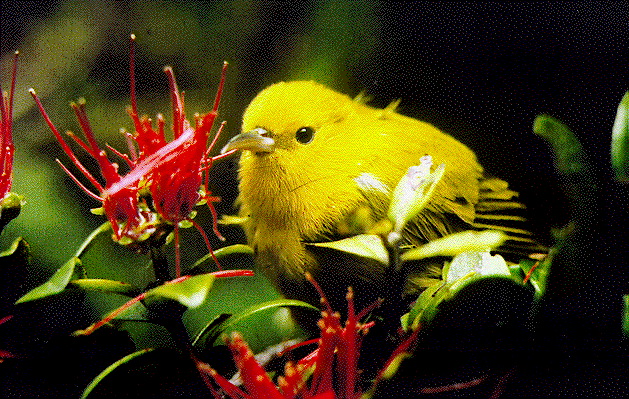
- ‘Anianiau are tiny birds with roundish bodies and slender legs.
- They have small, downward-curving beaks.
- They have vibrant, bright-yellow plumage all over.
‘Anianiau are the smallest species of Hawaiian honeycreeper. They drink nectar from flowering trees using their curved beaks and long tongues. They prefer Ohia, Ohelo, and Alani trees.
‘Anianiau Range Map

‘Anianiau are endemic to the island of Kauai.
Historically, they could be found throughout forested areas of the island. Now, ‘Anianiau only inhabit forests above 600m elevation. They are most common in native forests with a high prevalence of Ohia trees at elevations of 1100 to 1600m.
‘Anianiau are classified as “endangered” by the IUCN RedList. Their population has dropped by 60% in a decade.
As ‘Anianau only nest and breed in Ohia trees, they are greatly impacted by Rapid Ohia Death (ROD). ROD refers to the severe decline in Ohia trees following infection with fungal pathogens. Ohia trees are a keystone species in the Hawaiian ecosystem, and their loss affects many other species.
‘Anianiau is also greatly affected by avian malaria and avian pox. Mosquitoes infect ‘Anianiau with these diseases when they drink their blood. Currently, mosquitoes inhabit warmer, wetter forests at low elevations, which is why ‘Anianiau disappeared from these areas.
‘Anianiau make a trilling call that is quite recognizable and pleasant to hear! Take a listen to the video below.

#4. ʻAkiapolaʻau
- Hemignathus wilsoni
- Only found on the Big Island.

- Males are bright yellow with greenish wings.
- Females are duller, with a gray look to their yellow and green plumage.
- Their black beaks are curved downward in the top jaw but straight and straight in the bottom.
‘Akiapola’au are a species of honeycreeper that is endemic to Hawaii (Big Island). ‘Akiapola’au use the lower jaw of their fascinating beak to peck through the bark, much like a woodpecker. They then use their long, curved upper jaw to extract insects from within.
‘Akiapola’au Range Map
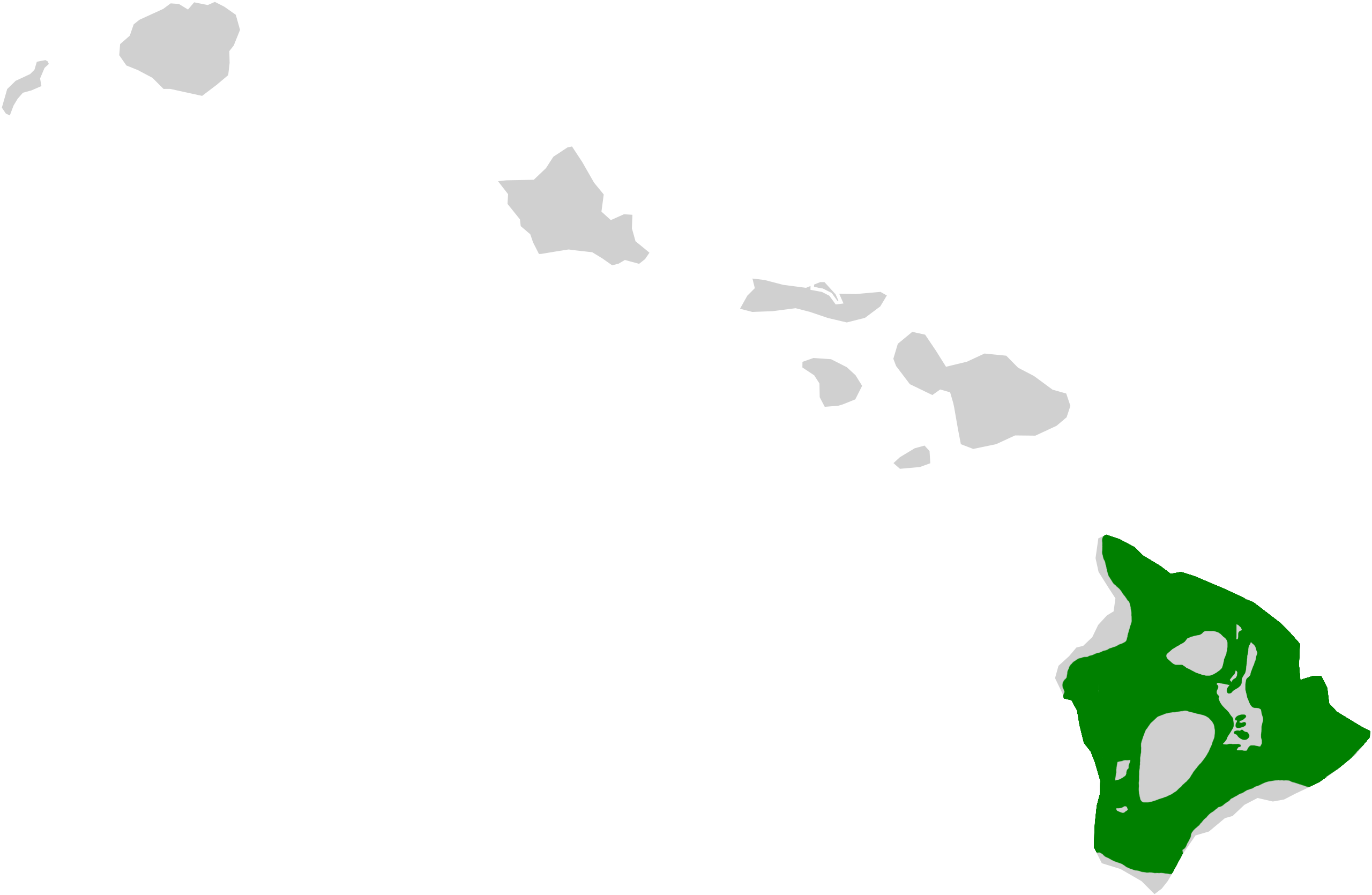
‘Akiapola’au only live on the island of Hawaii. Their range has decreased dramatically and their population is fragmented into two to three groups. Sadly, ‘Akiapola’au are considered endangered by the IUCN RedList.
‘Akiapola’au prefer mesic and wet old-growth forests, with many Koa and Ohia trees. Positively, ‘Akiapola’au have also settled in areas reforested with young Koa trees. The best place to spot ‘Akiapola’au is Hakalau Forest National Wildlife Refuge.
‘Akiapola’au face many threats to their population. Mosquitoes spread avian malaria and avian pox to birds that enter low-elevation, moist forest habitats. As a result, ‘Akipola’au have been driven from these areas entirely.
Farming and development further fragment their habitat. This shrinking range is a huge threat to the ‘Akipola’au population.
Male ‘Akiapola’au have beautiful singing voices. Check out their calls below.

#5. Hawai’i ʻAkepa
- Loxops coccineus
- Only found on the Big Island.

- Adult males have beautiful, blood-orange plumage all over.
- Females are the same shape but are yellowish-gray, with yellow breasts.
- Both have black wing tips and legs.
Hawai’i ‘Akepa are an endemic bird only found on Hawaii Island (Big Island). These unique birds have several features that make them highly specialized.
The lower jaws of Hawai’i ‘Akepa beaks are curved to either the right or the left. This makes the tips of their beaks misaligned. Furthermore, the leg on the side the beak that bends toward will be shorter than the other. This adaptation likely aids in foraging behavior.
Hawai’i ‘Akepa Range Map

Hawai’i ‘Akepa historically lived throughout the forested regions of Hawaii Island. Today, they are fragmented into five small subpopulations that live in north and central Hawaii. The IUCN RedList asses Hawai’i ‘Akepa as “endangered.”
Hawai’i ‘Akepa have a shrinking range, dictated by the loss of old-growth native forests and the population of mosquitoes. Mosquitos inhabit the warm, moist forest habitat found at lower elevations.
Mosquitoes spread deadly avian malaria to these endemic birds. Hawai’i ‘Akepa have completely disappeared from their lower elevation habitats, as avian malaria affects them strongly. As climate change causes warming, the mosquito will spread to higher elevations, driving back Hawai’i ‘Akepa habitat even more.
Hawai’i ‘Akepa are tree cavity nesters. Suitable trees are continually lost to logging, agriculture, and habitat destruction by invasive species, which means that opportunities to build nests and reproduce are disappearing for them.
#6. ‘Alawi
- Loxops mana (Sometimes classified in the monotypic genus Manucerthia mana)
- Only found on the Big Island.
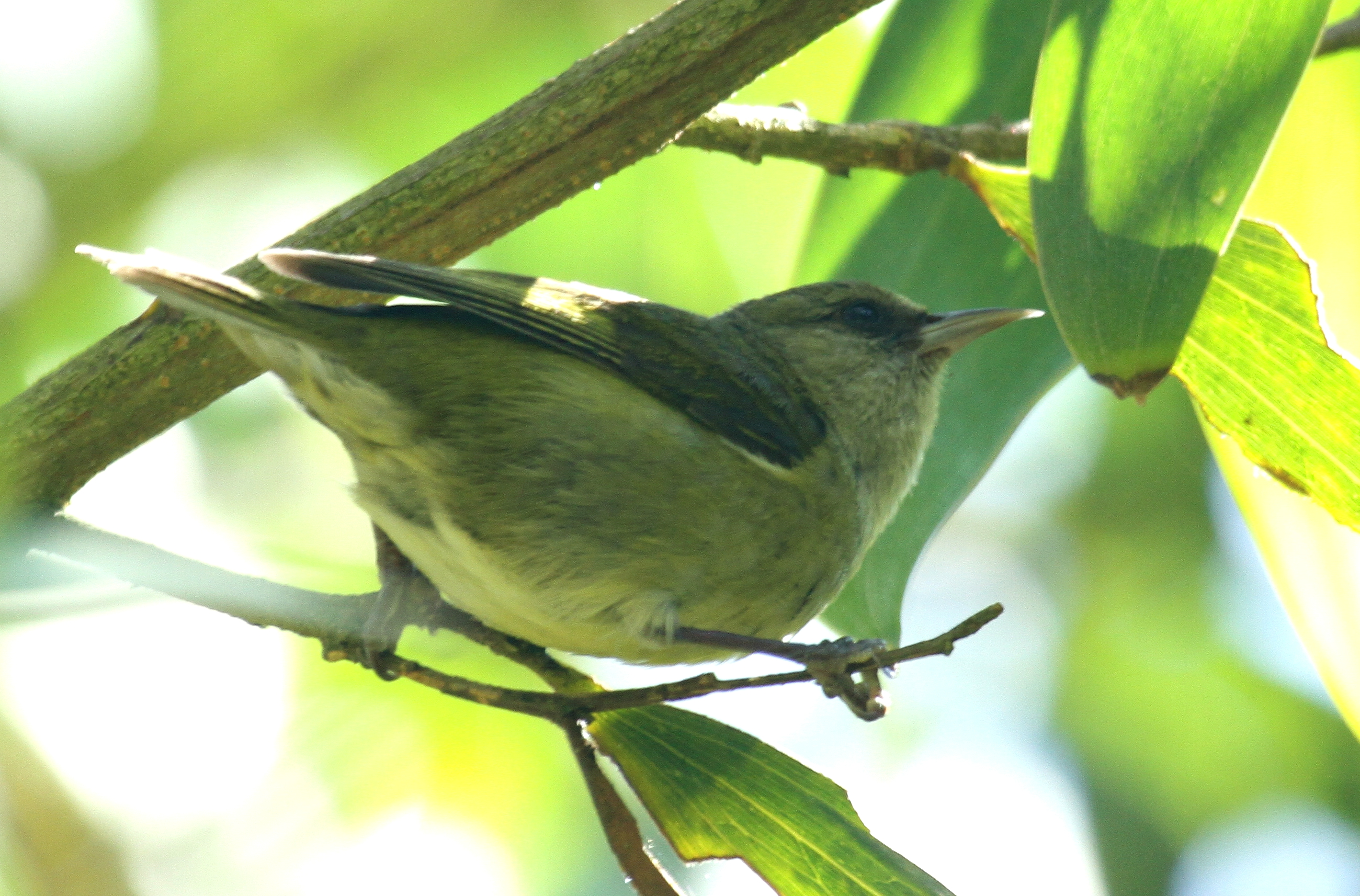
- Hawaii creepers are greenish-brown on their heads, back and wings.
- They have beige-brown bellies.
- They have short, narrow, pointed beaks.
‘Alawi are a species of honeycreeper, commonly referred to as Hawaii creepers. They are endemic to the island of Hawaii.
‘Alawi primarily eat insects. They hunt in the canopy of native Ohia and Koa trees. They use their sharp beaks to pick insects out of tiny crevices. Watch one probing the bark for invertebrates in the video below.

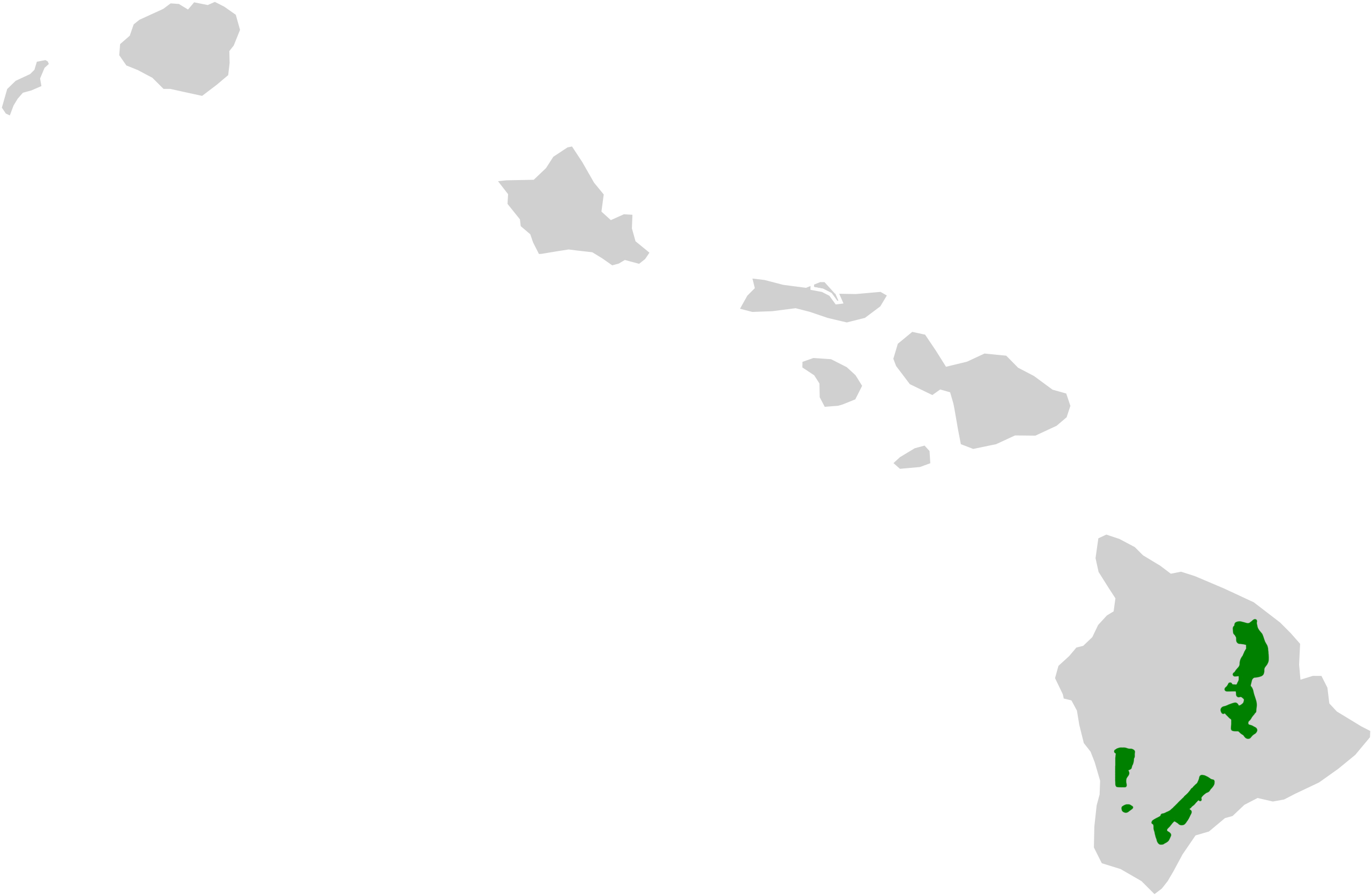
These endemic birds are only found on Hawaii Island (Big Island). Historically, they were abundant across forest habitats on the island. Nowadays, they exist in four fragmented populations. The IUCN RedList assesses Alawi as being “Endangered.”
‘Alawi prefer high-elevation, wet or mesic forests. They are most abundant in high-elevation habitats with native Ohia and Koa trees.
‘Alawi Range Map
Invasive rats threaten the survival of ‘Alawi. Rats eat eggs, chicks, and even grown birds. As ‘Alawi make their nests either in or near tree trunks, it is easier for the rats to reach the nests. Sadly, this means that many nests fail to produce offspring.
Like many other forest birds, ‘Alawi are threatened by avian malaria and avian pox. Mosquitoes spread these diseases to birds that enter lower-elevation, warmer habitats.
#7. Maui ‘Alauahio
- Paroreomyza montana
- Only found on Maui.

- Males are bright yellow, with a greenish tinge on the top half of their body.
- Females are similar but a little duller in color and a bit gray on top.
- They have short, sharp, pointed beaks that are slightly downward curved.
Maui ‘Alauahio are a species of Hawaiian honeycreeper, commonly referred to as “Maui creepers”, from the Hawaiian archipelago. They look very similar to Hawai’i Amakihi.
Interestingly, for honeycreepers, Maui ‘Alauahio do not drink nectar. They are insectivores. They use their sharp beaks to pluck a wide variety of insects and other invertebrates from bark and foliage.
Maui Alauahio Range Map

Until the 1930’s, Maui ‘Alauahio were present on the island of Lanai. Sadly, today, these endemic birds can only be found in three fragmented populations on the island of Maui. The IUCN RedList assesses Maui ‘Alauahio as “Endangered.”
The best place to spot Maui ‘Alauahio are the north and east-facing slopes of Haleakalā (East Maui Volcano). They are most abundant above 4920 feet (1500m) elevation, in wet Ohia forest.
Like many other forest birds, Maui ‘Alauahio are threatened by blood-borne avian diseases. Mosquitoes spread avian malaria when birds visit low-elevation forest habitats, which, combined with habitat degradation, is why Maui ‘Alauahio have disappeared from these areas.
#8. Hawaiʻi ʻAmakihi
- Chlorodrepanis virens
- Found on the Big Island, Maui, and Molokai.

- Hawai’i ‘Amakihi are small, bright yellow birds. Females are slightly drabber.
- They have small, pointed, downward-curved beaks.
- They have black wing tips and tiny black masks from their eyes to beaks.
Hawai’i ‘Amakihi are a species of honeycreeper from the Hawai’ian archipelago. They are very adaptable birds and generalist feeders. This has been key to their success and survival.
Hawai’i ‘Amakihi Range Map

These endemic birds live on Hawaii Island (Big Island), Maui, and Molokai. Previously, they could also be spotted on Lanai, but the species is believed to be extirpated there. The IUCN RedList assesses this adaptable species as being of “Least Concern” and not in danger of extinction.
Hawai’i ‘Amakihi have adapted to many habitats. They can be found from low elevations of around 80 feet (25 meters) up to high elevations of around 8000 feet (9840 meters). Look for them inhabiting wet, mesic, and dry forests.
Hawai’i ‘Amakihi are not very common below 500 meters. When mosquitoes enter low-elevation forests, they spread deadly avian malaria to Hawai’i ‘Amakihi. However, they are developing a resistance to malaria and reclaiming the low-elevation forest habitat.
Male Hawai’i ‘Amakihi have lovely singing voices for courting females. Check out their calls in the video below.

#9. Oʻahu ʻAmakihi
- Chlorodrepanis flava
- Only found on Oahu.

- Male O’ahu ‘Amakihi have acid-yellow bellies and greenish wings.
- Females have a similar shape, but their colors are dulled almost to gray.
- They have small, pointed, downward-curved beaks.
O’ahu ‘Amakihi are endemic to the island of Oahu. Historically, they likely lived in all the forests on Oahu. However, their range and population have reduced. The IUCN RedList assesses O’ahu ‘Amakihi as being “near threatened.”
O’ahu ‘Amakihi Range Map

Today, O’ahu ‘Amakihi are divided into two main populations. One is in the Wai’anae Mountains, where conditions are drier. O’ahu ‘Amakihi mostly live at mid to high elevations in the forest there. The birds are spread out, and the population is not dense.
The second population is in the Ko‘olau Mountains, where conditions are wetter. They are more abundant there and can be seen from very low to high elevations.
Like other forest birds in Hawaii, O’ahu ‘Amakihi is threatened by avian malaria. Mosquitoes transmit the disease to birds in low-elevation, humid habitats.
However, the presence of O’ahu ‘Amakihi at low elevations demonstrates that they have developed some malarial resistance, which other honeycreeper species have not.
Habitat loss through fire, urbanization, and invasive plant species continues to limit O’ahu ‘Amakihi recovery. Invasive predators are also a threat.
#10. Kaua’i ‘Amakihi
- Chlorodrepanis stejnegeri (previously Hemignathus kauaiensis)
- Only found on Kauai.

- Males are yellowish green all over, with black tips to their wings.
- Females are slightly duller in color.
- They have fairly long, narrow, sharp beaks that curve downward.
Kaua’i ‘Amakihi are endemic to the island of Kauai.
Kaua’i ‘Amakihi are adept at clinging to thin twigs and hanging upside down. They drink nectar from flowering Ohia trees but have also adapted to drink from invasive Banana poka plants. See one drinking nectar and foraging in the video below.

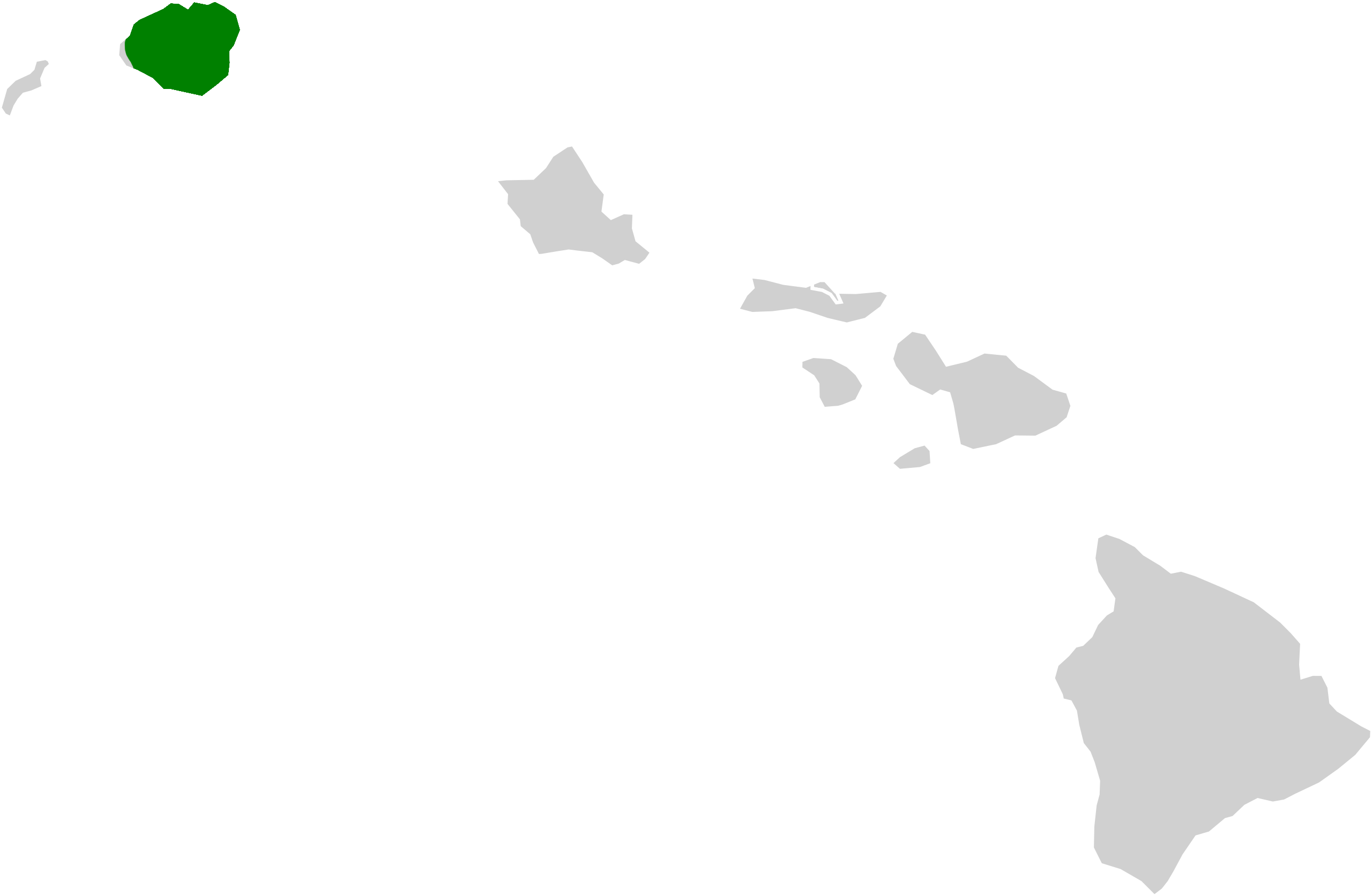
Historically, Kaua’i ‘Amakihi were abundant in the forest habitats all over the island of Kauai, down to the coast. Sadly, their range has contracted drastically. The IUCN RedList assesses Kaua’i ‘Amakihi as being “Endangered” and is moving toward extinction.
Today, Kaua’i ‘Amakihi are rare at low elevations. The best places to spot them are high-elevation, wet, or mesic forests of native trees, including Koa and Ohia.
Kaua’i ‘Amakihi Range Map
Like many other forest birds, these endemic birds are susceptible to avian malaria. Mosquitoes transmit avian malaria to birds when they go into low-elevation, warmer forest habitats. This is a key factor in why Kaua’i ‘Amakihi deserted their historical range in the low-elevation wet forests of Kauai.
However, deforestation is also key. Agriculture and urban development have destroyed large areas of lowland forests. Furthermore, the introduction of invasive plants, as well as farm and game mammals, has severely damaged the forest ecosystem and driven Kaua’i ‘Amakihi away.
#11. Palila
- Loxioides bailleui
- Only found on the Big Island.

- Palila are small birds with finch-like, short, wide beaks.
- They have bright yellow heads and throats.
- They have dove-grey bodies with yellow and black tips to their wings and tails.
Palila have evolved to become extremely specialized. Their feet and beaks are perfectly adapted to harvesting immature Mamane seeds, which comprise 90% of Papila’s diets. Fascinatingly, Papila have evolved resistance to the toxic alkaloids in Mamane seeds. They can survive consuming amounts that would quickly kill other birds.
Palila are only found on Hawaii Island (Big Island). However, the fossil record shows they were found throughout the archipelago before human settlers arrived.
Palila Range Map

Nowadays, Palila are found in a very small range on the western slope of the Mauna Kea volcano. They live in arid Mamane forests at elevations between 6560-9350 feet (2000 and 2850m). Palila are assessed as “critically endangered” by the IUCN RedList.
As Palila are so reliant on Mamane trees, their fate is strongly impacted by their decline. Introduced livestock, especially sheep, have led to severe Mamane loss. Invasive grasses, which increase the occurrence of wildfires, have also destroyed Mamane forest habitat.
Invasive predators, including rats and domestic cats, are a huge threat to Palila. They could account for up to 40% of breeding failures. Invasive insects directly compete with Palila for food by eating native caterpillars, which Palila chicks rely upon for their diet.
#12. Hawai’i ‘Elepaio
- Chasiempis sandwichensis
- Only found on the Big Island.

- Hawai’i ‘Elepaio are small birds with tall, upward-pointing tails.
- They have red-brown heads and bodies, cream underbellies, and dark tails.
- At their upper wing coverts, they have bands of black and white.
Hawai’i ‘Elepaio is endemic to Hawaii Island (Big Island).
They are very specialist birds that are highly adapted to their environment.
Hawai’ian ‘Elepaio are divided into three subspecies. They inhabit different ecological niches on the island of Hawaii. The species overall is assessed as “near threatened “ by the IUCN RedList. However, pressures on the subspecies vary depending on their habitat.
Chasiempis sandwichensis sandwichensis inhabits mesic forests characterized by native Ohia and Koa trees. These forests are usually on western and southern slopes and are not too wet or dry.
Chasiempis sandwichensis ridgwayi inhabits wetter rainforests, usually on eastern-facing slopes. Ohia trees and tropical tree ferns characterize this habitat. C.s.ridgway is the most common Elepaio subspecies.
Chasiempis sandwichensis bryani inhabits very high-elevation forests around the Mauna Kea volcano. This habitat is arid. It is characterized by Mamane and Naio tree growth. C.s.briyani are the rarest of the ‘Elepaio species thanks to habitat loss.
There are small differences in the appearance of the three subspecies. They also favor different foraging strategies, depending on the resources in their habitat.
#13. O’ahu ‘Elepaio
- Chasiempis ibidis
- Only found on Oahu, Molokai.

- O’ahu ‘Elepaio are tiny birds with small pointed beaks.
- They have brown heads and wings, with white bellies.
- They have white bars on their wings, and males have more black markings.
O’ahu ‘Elepaio are endemic to the island of Oahu in the Hawaiian archipelago.
Currently, the IUCN RedList has assessed O’ahu ‘Elepaio as “vulnerable.” They were once abundant across the island. Their population has decreased by 75% since the 1970s and is now fragmented into small groups.
The tiny populations don’t tend to migrate between areas or interbreed. This means that each group has a very small genetic pool. As a result, there is very limited variation, making it difficult for the species to adapt to threats and evolve.
Sadly, O’ahu ‘Elepaio face a myriad of threats. Rats predate their nests, severely reducing their reproductive success. Invasive plants intensify the problem by providing abundant fruits that bolster the rat population.
Habitat loss is also a major factor threatening the O’ahu ‘Elepaio population. Over half of their range has been lost to agriculture and urbanization.
Furthermore, O’ahu ‘Elepaio have suffered from losses due to avian malaria and avian pox. Mosquitoes spread these diseases, making low-elevation, moist habitats dangerous.
#14. Kaua’i ‘Elepaio
- Chasiempis sclateri
- Only found on Kauai.

- ‘Elepaio have buff undersides, bronze heads and chests, and brown wings.
- They have very short, slender, pointed beaks.
- Their bodies are small and round-shaped.
Kaua’i ‘Elepaio are unique birds endemic to the island of Kauai. They are a species of monarch flycatcher.
Kaua’i ‘Elepaio can most commonly be found in wet forests of native Ohia trees at very high elevations. However, they can also be spotted in lower-elevation forests, including those composed of non-native trees.
Historically, as recently as the 1970s, Kaua’i ‘Elepaio were much more abundant throughout all forested areas on Kauai. Their population had declined dramatically, and the ‘Elepaio were deemed “vulnerable” to extinction.
Their population has increased rapidly in their key habitat, the Alaka‘i Plateau. The plateau is a wet, dense, montane forest composed primarily of Ohia trees. ‘Elepaio are now considered “near threatened” by the IUCN RedList.
Kaua’i ‘Elepaio males have unique call whistling calls. Listen to the video below!
#3. Hawaiian Hawk
- Buteo solitarius
- NATIVE to Hawaii
- Only found on the Big Island of Hawaii.

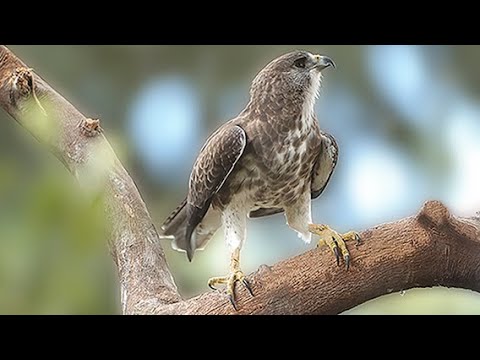
- Hawaiian hawks are well camouflaged by bark-brown plumage.
- Depending on the color phase, they may have brown or cream chests.
- They have long, gray, hooked beaks.
These endemic birds are ONLY found in Hawaii!
Hawaiian hawks are fairly large birds of prey, up to 18 in (45cm) long. Their ability to soar higher than any other Hawaiian bird led them to be historically associated with royalty. They have a loud, screeching call that is said to sound similar to their Hawaiian name (‘’o).
Before the introduction of invasive mammal species to the ecosystem, the Hawaiian hawk most likely fed on small birds. In modern times, the hawk also preys upon rats, mice, and game bird species.
Historically, Hawaiian hawks could be seen on many islands in the Hawaiian archipelago. Nowadays, they only breed on the Big Island.
These birds of prey are primarily threatened by habitat loss due to deforestation in Hawaii. Trees are cut down to make timber or to clear space for agriculture or urban expansion. Invasive species, notably plants and deer, also cause severe damage to the forest habitat.
Unfortunately, in modern times, Hawaiian hawks face direct threats from humans, such as shooting and poisoning. Accidental traffic collisions are also a significant cause of mortality for hawk species, and the Hawaiian hawk is no exception.
#16. ʻOmaʻo
- Myadestes obscurus
- Only found on the Big Island.

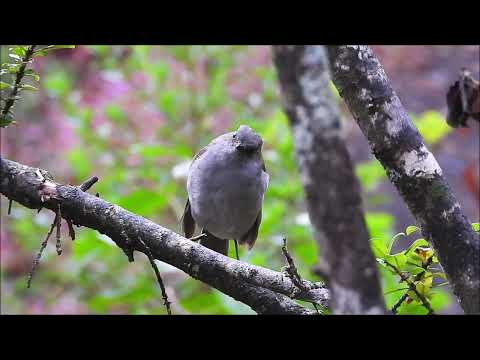
- ‘Oma’o are small birds with slender legs and small black beaks.
- They have bark-brown heads and wings.
- Their chests are dove-gray.
‘Oma’o are a small species of thrush endemic to Hawaii Island (Big Island).
Historically, ‘Oma’o could be found across the Big Island’s forested areas. Nowadays, they are usually found in mesic and rain forests on the southern and eastern slopes. They are most common at high elevations above 1000m.
‘Oma’o are at risk from avian malaria and avian pox. Mosquitoes spread these diseases to ‘Oma’o when they forage at lower elevations. Positively, ‘Oma’o appear less likely to die from contracting avian malaria than other bird species. There is hope that they may be able to reclaim lowland habitats in the future.
‘Invasive predators and livestock also threaten Oma’o. Pigs, especially, compete with them for dietary fruits and berries. Rats predate ‘their nests and have a strong negative impact on the population.
‘Oma’o make various interesting sounds, including whistles, croaks, and tweets.
#17. Hawaiian Coot
- Fulica alai
- Found on Maui, Kauai, Oahu, Molokai, and the Big Island.

- Hawaiian coots have shiny black plumage all over.
- They have bright white bills with tall frontal shields that are white or brown.
- They have small, rounded bodies with small heads.
These water birds are endemic to Hawaii!
They usually live in shallow, saline water, such as brackish lagoons and estuaries along the coastline. But they can also be found in freshwater ponds, streams, lakes, and wetlands.
Maui, Oahu, or Kauai are the best places to see Hawaiian coots.
However, small populations of them can be seen on almost all Hawaiian islands.
Hawaiian coots are considered “near threatened” by the IUCN RedList in 2023. This is an improvement on their “vulnerable” status in the early 21st century. However, Hawaiian coots still face many threats.
Habitat loss is the primary threat to Hawaiian coots. Coastal plains and wetlands, which make the best breeding sites, have been rapidly lost over the last century.
Invasive predators also negatively impact Hawaiian coots. Rats and mongooses are prolific egg stealers, and dogs, domestic cats, barn owls, and other introduced predators will predate adult coots, too.
#18. Hawaiian Goose
- Branta sandvicensis
- Found on Maui, Kauai, and the Big Island.

- Hawaiian geese have black heads, gold cheeks, white necks, and brown bodies.
- Their plumage has a distinct barred pattern over the wings and flanks.
- Females look similar to males but are usually smaller.
Hawaiian geese are large, beautiful geese that represent Hawaii as the official state bird.
These endemic birds are grazers that feed on leaves, seeds, flowers, and fruits. They are very important to the ecosystem, as they disperse plant seeds in their feces.
Hawaiian geese almost became extinct in the early 20th century. Since that time, numbers have begun to recover. The species is currently classified as “near threatened” on the IUCN RedList.
Today, Hawaiian geese can only be seen on Hawaii Island, Kauai, and Maui.
In the past, hunting by humans was a major threat to Hawaiian geese. In modern times, hunting by invasive species is the greater issue. As ground-nesting birds, they are very vulnerable to invasive predators, including Barn owls, domestic cats, dogs, rats, and mongooses.
#19. Hawaiian Duck
- Anas wyvilliana
- Pure Hawaiian ducks are only likely to be found on Kauai and Niihau.

- Hawaiian ducks’ plumage is light and dark brown, with scale-like patterning.
- They have a clearly defined patch of shiny blue on both wings.
- Males and females look very similar, but females are usually smaller.
Hawaiian Ducks are endemic to Hawaii.
These water birds look very similar to Mallards and are closely related. However, they are not very social birds. They don’t tend to form flocks. Instead, they are usually observed in pairs or alone. They are fairly wary and discrete.
Hawaiian ducks make a soft and discrete quacking sound. It is very suited to their nature! Listen to them in the video below.

Historically, Hawaiian ducks lived on all Hawaiian islands except Lanai and Kaho’olawe. However, humans hunted the Hawaiian duck to the edge of extinction in the early 20th century. By 1960, the last remaining ducks lived isolated on Kauai and Niihau.
Since then, efforts have been made to conserve this species. A wildlife refuge was created on Kauai, and Hawaiian ducks were bred and reintroduced to Oahu, Maui, and the Big Island.
Unfortunately, invasive feral mallard ducks were not removed from these islands before the Hawaiian duck was reintroduced. Mallards breed readily with Hawaiian ducks. They produce viable offspring, leading to the hybridization of the species.
Today, pure Hawaiian ducks are only likely to be found on Kauai and Niihau. Unfortunately, the success of the mallard hybrid is expected to lead to the disappearance of the pure Hawaiian duck.
Do you want to learn about MORE birds in Hawaii?
Check out these ID Guides. Each one is specific to birds found here!
Which of these endemic birds have you seen before in Hawaii?
Leave a comment below!

